From Seals to Soft Grippers: 3D Printing Flexible Parts
Wednesday 16th September 2026
When you think of resin 3D printing, you might picture highly detailed rigid prototypes. However, combining today’s elastomeric materials with the speed and print quality of the Formlabs Form 4 Series makes it possible to produce functional parts that bend, stretch, compress, cushion and recover their shape.
From stoppers and protective trims to seals, gaskets, soft grippers and end-of-arm tooling, resin 3D printing opens up new possibilities for producing customised flexible parts without tooling.
Why Use 3D Printing for Flexible Parts?
Flexible components are traditionally produced using processes such as injection or compression moulding, casting, extrusion, or cutting parts from sheet material. These established methods can work well for repeat production, but may require dedicated tooling, longer lead times or significant upfront investment.
Additive Manufacturing offers a more adaptable approach. Parts can be designed around a specific application, produced directly from digital files and modified quickly when requirements change. This makes the technology particularly useful for prototypes, replacement parts, low-volume production and highly customised components.
It also allows engineers to combine different levels of flexibility within a single design. Wall thickness, ribs, hollow sections and lattice structures can be adjusted to control how a part bends, compresses or recovers under load.
The Formlabs Flexible Resin Family
Formlabs’ flexible and silicone materials cover a range of softness, resilience and performance characteristics. The right choice depends on how the part needs to behave, rather than simply how soft it feels.
And with the launch of Formlabs Flexible 80A Resin V2, those possibilities have taken another considerable step forward.
| Material | Shore Hardness | Key Characteristics | Typical Applications |
| Flexible 80A V2 | 80A | Firm, resilient and highly tear-resistant, with improved rebound and fatigue resistance | Protective trims, bumpers, grips, gaskets, flexible housings and durable end-use parts |
| Flexible 50A | 50A | Softer, translucent elastomer that bends, stretches and compresses repeatedly | Soft-touch components, cushioning, compliant features, flexible covers and anatomical models |
| Silicone 40A | 40A | 100% silicone with high elasticity, chemical resistance and thermal stability | Seals, gaskets, keypads, buttons, flexible moulds and soft robotic grippers |
This range makes it possible to select a material based on the required balance of softness, recovery, durability and environmental performance.
Flexible 80A V2: A More Resilient Elastomer
Formlabs Flexible 80A V2 is a firm, resilient elastomeric material designed to replicate the appearance, feel and performance of 80A cast urethanes, TPUs and hard rubbers.
Compared with the previous formulation, Flexible 80A V2 delivers twice the tear strength, twice the elongation at break and four times the rebound. In practical terms, parts are stronger, more durable and significantly better at returning to their original shape after bending, stretching or compression.
Our side-by-side video puts Flexible 80A V1.1 and V2 through a stretch-to-break test. The V2 part stretches considerably further before breaking, making the improvement in elongation at break easy to see.
Applications can include:
- Protective trims and covers
- Seals and gaskets
- Grips and handles
- Bumpers, feet and cushioning components
- Flexible housings and connectors
- Soft inserts and fixtures
- Bellows and cable grommets
The material also produces a refined, tack-free surface with a deep black, matte finish, making it suitable for functional prototypes as well as selected end-use parts.
Protecting Industrial Equipment With a Bespoke Flexible Trim
To explore what Flexible 80A V2 can achieve, the CREAT3D engineering team designed and printed a large flexible trim based on a customer application.
In the original customer application, the edges of a steel container used as part of industrial boiler equipment were being damaged. A bespoke flexible trim was designed to fit snugly around the container, cushioning impacts and protecting its steel edges during use.
Our large trim, measuring 285mm by 180mm, combines a substantial, heavy-duty body with a thin flexible skirt, detailed ribs and integrated grommet-like features.
Using Design for Additive Manufacturing (DfAM), we varied the geometry and wall thickness across the part to create areas with different levels of flexibility, all in the same material.
It is a great example of the value of Additive Manufacturing for bespoke elastomeric parts. The trim can be designed around the equipment it needs to protect, produced without tooling or MOQs, and modified easily if the dimensions or requirements change.
Image Right: Large flexible trim was produced on a Formlabs Form 4L in 11 hours and 6 minutes.
Designing and Printing Large Flexible Parts
Producing a large elastomeric component requires more than selecting the right material. Flexible parts can move during the printing process, so the orientation, geometry and build setup must all be considered carefully.
For our Flexible 80A V2 demonstrator, the CREAT3D engineering team applied several design and print strategies:
- Keep the Z height low: We designed the part to print as flat as possible. This reduced movement or “jiggle” during the peel stage, helping to maintain part quality and prevent layer shifting.
- Design for printing directly on the build platform:
Printing flat provided a stable base and reduced the amount of support material required.
- Include evenly distributed vent holes:
Triangular vent holes allowed resin and air to move through the part, reducing cupping and suction forces while also helping to minimise supports and material waste.
- Use suitable wall thicknesses:
For this large component, we maintained wall thicknesses above 2mm where required to provide sufficient strength and reliable printability.
- Use a standard build platform:
We use the standard Form 4L Build Platform. Build Platform Flex makes rigid parts easier to release by flexing the plate, but a Flexible 80A V2 part bends with it rather than popping off. For this print, we removed the part from the standard platform with a scraper.
These considerations were incorporated at the design stage, helping us produce a large, detailed flexible component successfully while controlling support requirements and material usage.
The right approach will vary depending on the size, geometry and required behaviour of the part. This is where designing specifically for the material and the Additive Manufacturing process can make a significant difference to the finished result.
How Soft Can Resin 3D Printing Go?
Flexible 80A V2 may be the hero of the range, but different applications require different types and levels of flexibility.
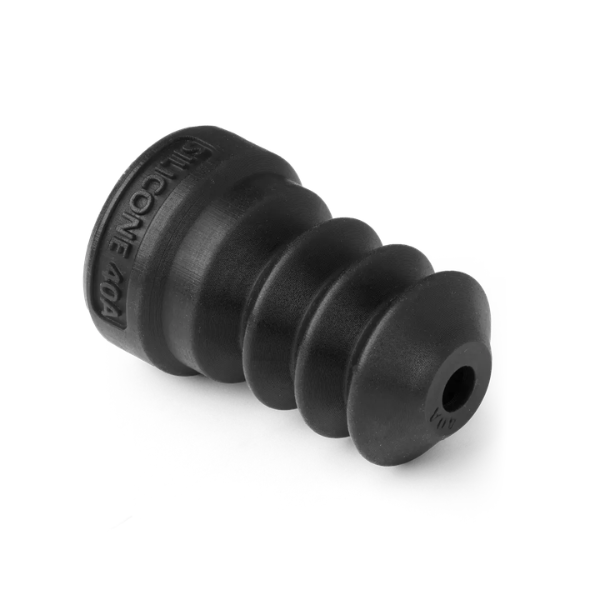
Silicone 40A Resin
For applications that require silicone, Formlabs Silicone 40A produces 100% silicone parts using Pure Silicone Technology.
It is the softest of the three materials and offers the elasticity, chemical resistance and thermal stability associated with conventional silicone.
Potential applications include seals, gaskets, flexible moulds, keypads, buttons, compliant connectors, masking fixtures and soft robotic grippers.
Directly printing silicone also allows complex, customised components to be produced without first manufacturing a mould or relying on a labour-intensive casting process.
Flexible 50A Resin
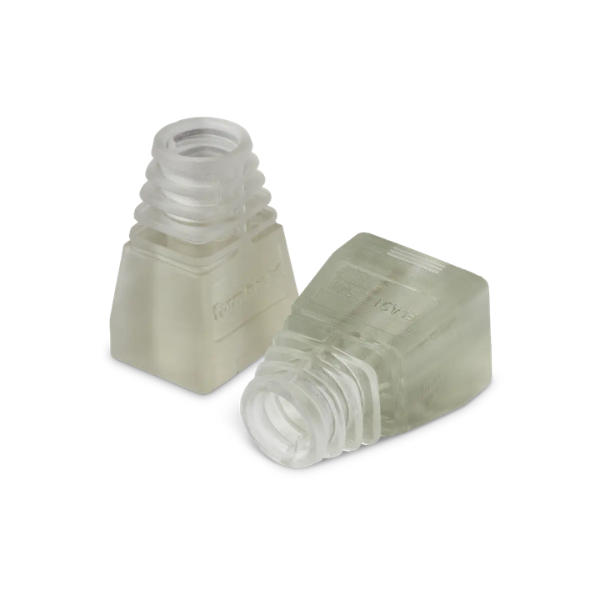
Previously known as Elastic 50A, Flexible 50A is a softer, translucent elastomeric resin. It is designed for parts that need to bend, stretch and compress repeatedly before quickly returning to their original shape.
Its softer feel makes it suitable for applications such as compliant features, soft-touch components, cushioning, flexible covers, anatomical models and prototypes normally produced in softer rubbers or silicones.
One Material Does Not Fit Every Flexible Application
The Shore hardness provides a useful starting point, but selecting a flexible material is about more than choosing how soft the finished part should feel.
Consider how the component needs to behave:
- Will it bend, stretch or compress?
- How quickly must it recover its shape?
- Will it experience repeated movement or loading?
- Does it need to cushion, grip, seal or conform?
- Will it encounter heat, chemicals or environmental exposure?
- Is it a prototype, manufacturing aid or end-use component?
- How many parts are required: a single component, a small batch or repeat production?
Part geometry matters too. Wall thickness, ribs, hollow sections and lattice structures can all be used to control how a component moves and responds under load.
The best place to start is therefore the application and the behaviour you need the part to achieve, not simply the softest available material.
Want to Explore Flexible 3D Printing?
Have an idea for a flexible component? Speak to the CREAT3D engineering team to explore the right material, design and production process for your application.
👉
Speak to our engineering team to discuss your application or call 0800 689 1011. Or
request a sample part so you can see the material performance for yourself.